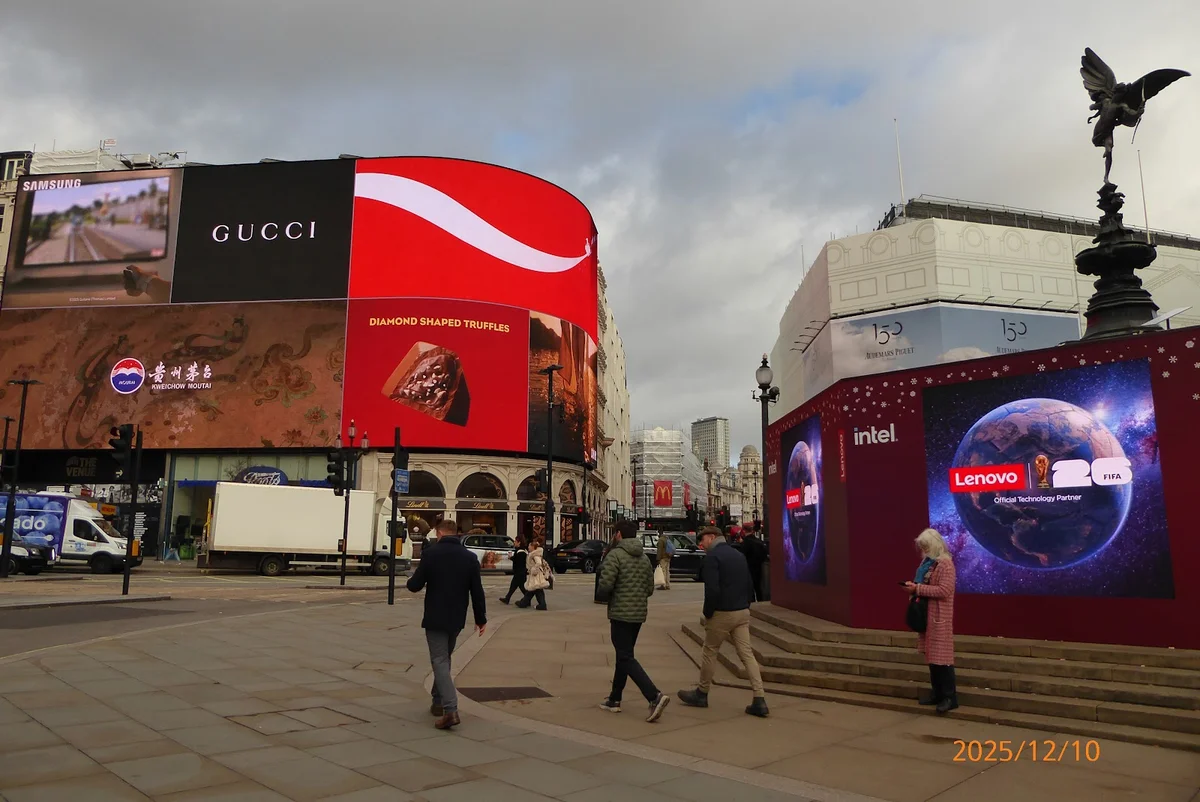
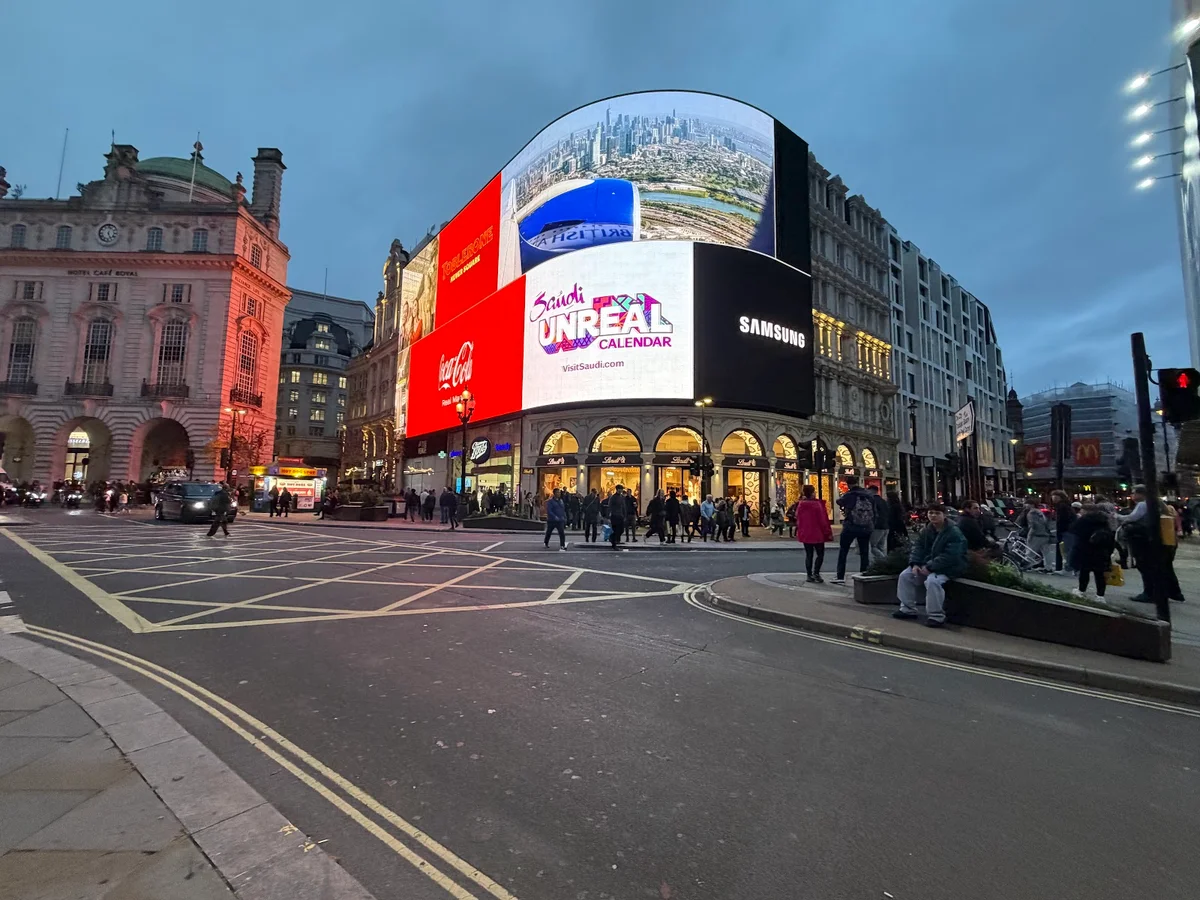
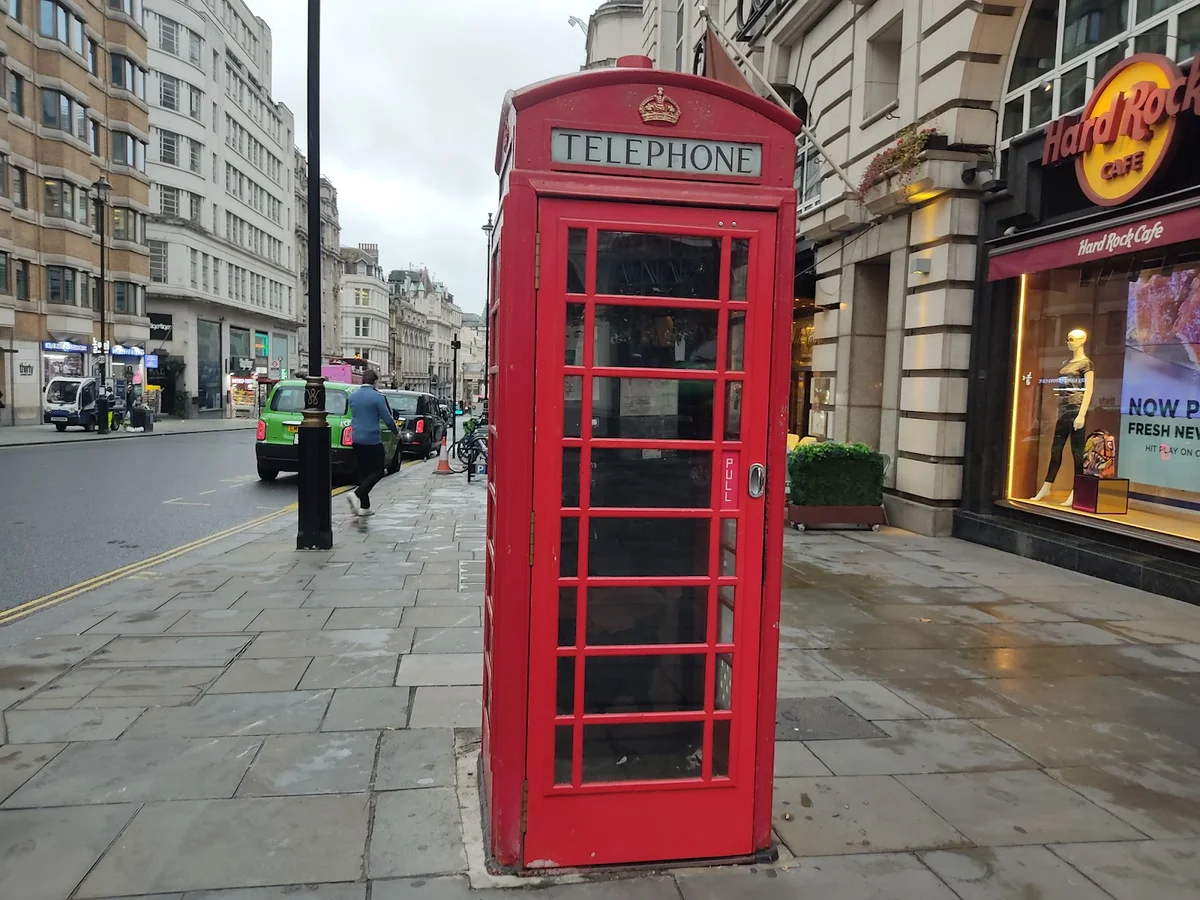
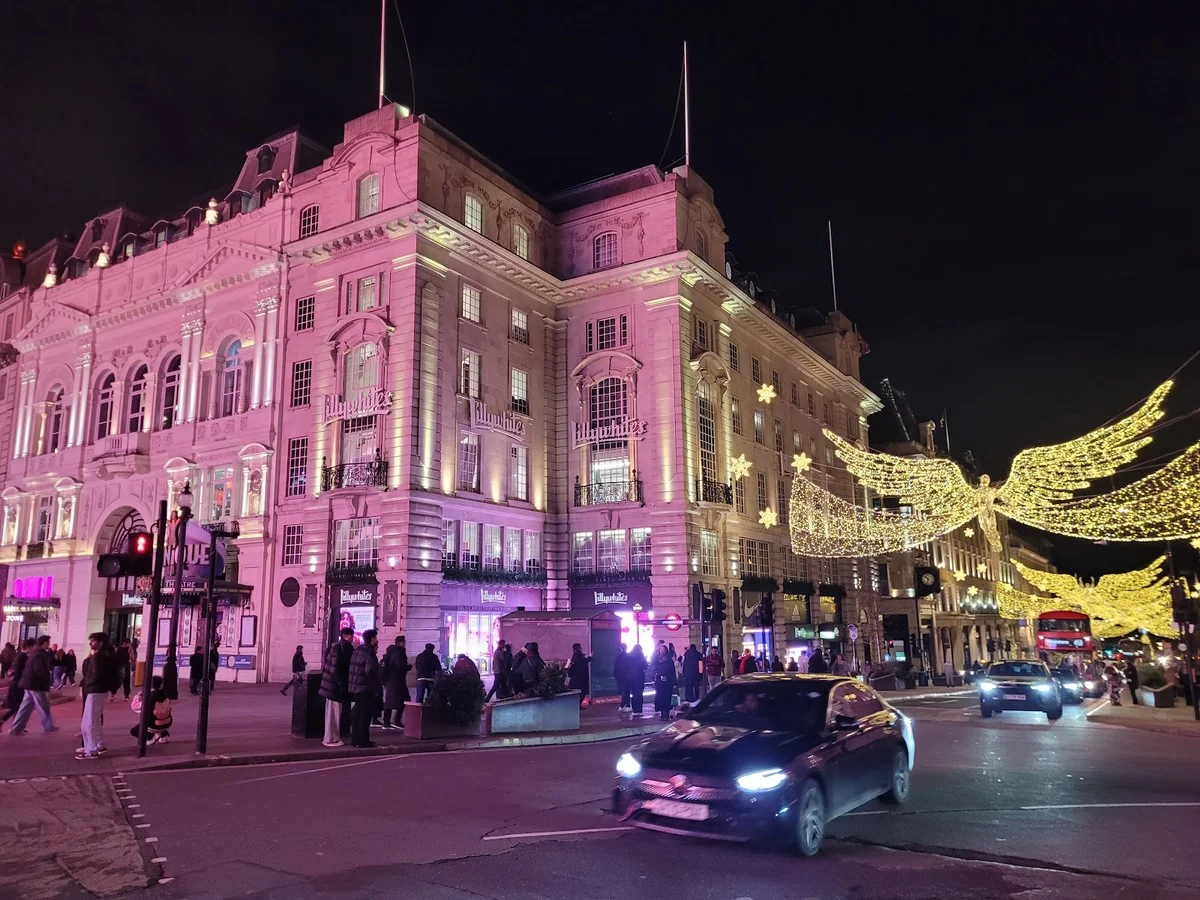
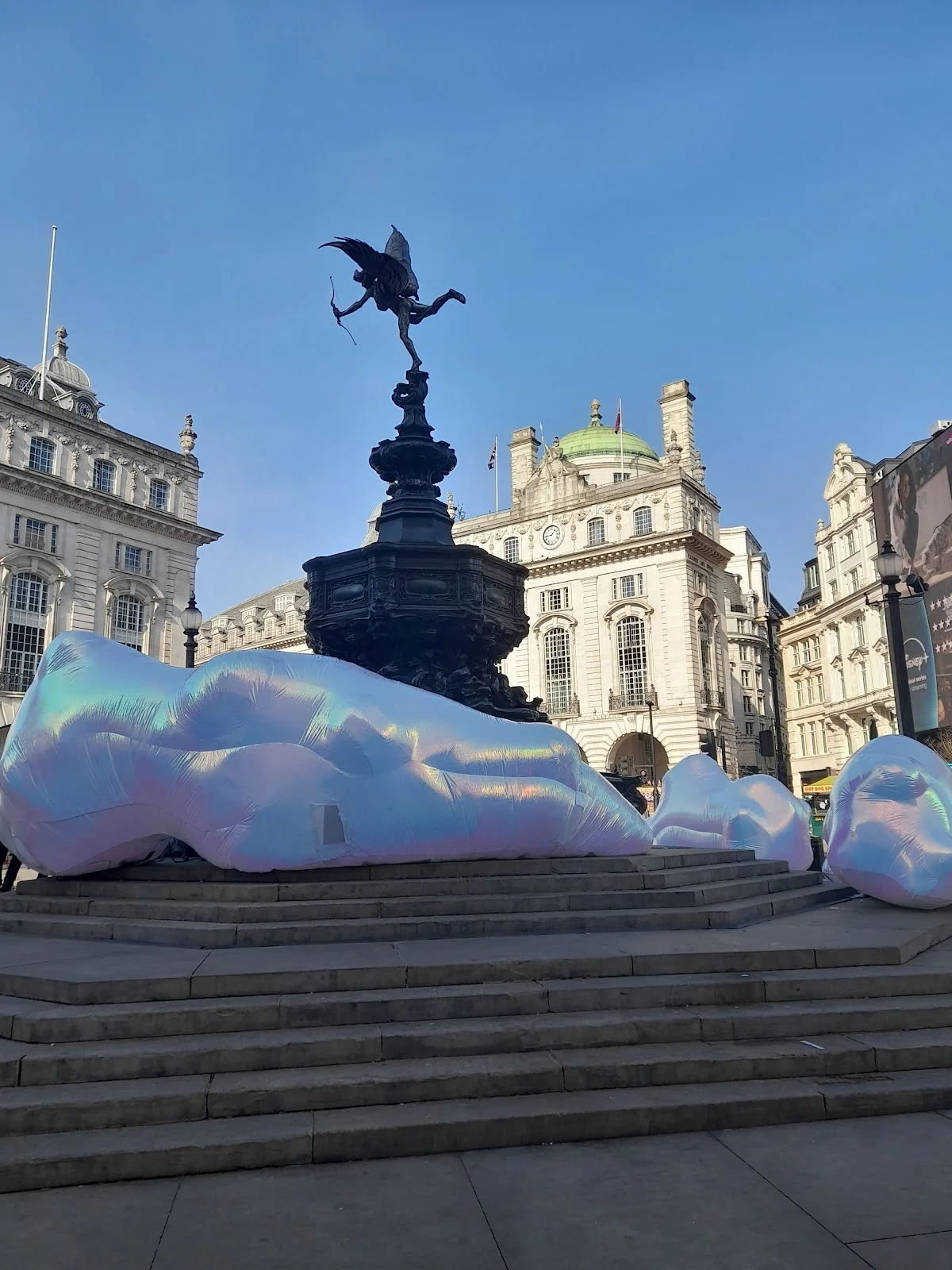
Piccadilly Circus is a prominent road junction and public space in London's West End, established in 1819 to connect Regent Street with Piccadilly. The term 'circus' refers to a circular open space at a street junction. It serves as a major traffic hub and a popular meeting point, surrounded by notable landmarks such as the Shaftesbury Memorial Fountain and the statue of Anteros, often mistakenly referred to as Eros. The area is renowned for its large video display and neon signs on the northern corner building, adding to its vibrant atmosphere. Beneath the plaza lies the Piccadilly Circus tube station, part of the London Underground system, providing easy access to the area.
What each source says
- Viator 4.2 26,226
- Tripadvisor 4.0 5,957
- Google 4.7 208
Bar length is review volume, so you can see how much weight sits behind each score. Captured 2026-08-26.
What visitors single out
Liked
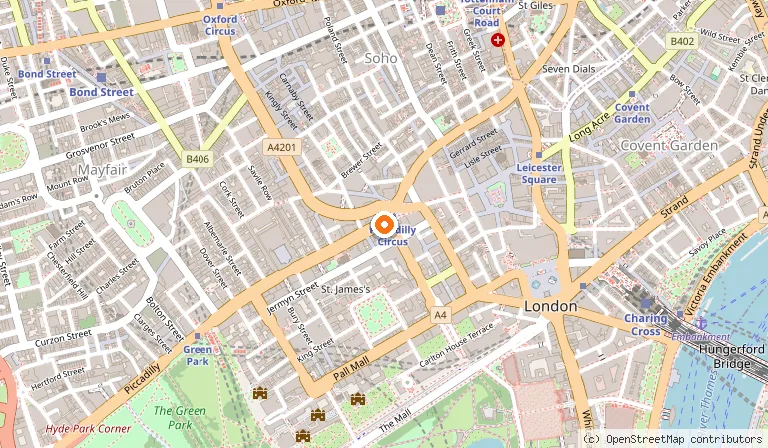
- Central Hub Located at the nexus of major streets, it provides effortless walking access to popular areas like Regent Street, Soho, Leicester Square, and the vibrant West End theatre district.
- Iconic Atmosphere It captures the classic pulsing energy of London, especially at night when the neon billboards light up, creating a vibrant, cinematic experience similar to New York's Times Square.
- People-Watching Haven The area serves as a fantastic, dynamic vantage point where you can sit by the Shaftesbury Memorial Fountain to observe the diverse, bustling crowds and street performers pass by.
- Perpetual Energy Day or night, the area is constantly alive with activity, making it an excellent starting point for visitors who want to feel the true, relentless pulse of the city.
- Photography Hotspot Whether you are capturing the famous winged statue of Anteros, the architecture, or the vibrant glow of the billboards, it remains one of London's most quintessential, must-snap landmarks.
Criticised
- Limited Scope Aside from the photo-op with the fountain and lights, there is not much to do here besides transition to other areas, leading some to feel it lacks substantial attractions.
- Noise and Chaos Because it is a major transport and entertainment hub, the area is consistently loud and frantic, making it entirely unsuitable for those seeking a tranquil or relaxing stroll.
- Overwhelming Crowds The space can be intensely hectic, with heavy pedestrian traffic that makes it difficult to navigate comfortably, especially during peak weekend hours or the holiday shopping season.
- Petty Crime Risks The dense, bustling crowds, particularly at night, often attract opportunistic pickpockets, so visitors are frequently cautioned to keep a close eye on their belongings while sightseeing.
- Tourist Trap Concerns Many visitors feel the area is over-hyped; it functions largely as a glorified traffic intersection rather than a destination, lacking the depth to keep you occupied for long.
The longer read
Piccadilly Circus is widely recognized as London’s high-energy heart, frequently compared to New York’s Times Square, though on a smaller and more concentrated scale. The area is defined by its massive digital billboards, relentless crowds, and the constant hum of city traffic. Reviewers consistently note that the experience is best captured at night, when the neon signs illuminate the surroundings, reflecting beautifully off the pavement, especially after rain. It serves as a quintessential urban landmark—a bustling, vibrant space that perfectly encapsulates the pulse of central London. While many visitors find the chaotic energy exciting, others warn that it is not a destination for quiet reflection, but rather a place to briefly soak in the city's frantic, modern rhythm.
Beyond its visual appeal, the area’s primary utility lies in its central geography. It acts as an invaluable anchor for navigating the West End. You are steps away from major cultural and commercial hubs, including Leicester Square, Regent Street, Soho, and Chinatown. Many seasoned travelers advise using the Circus as a convenient starting point for walking tours, as it provides seamless access to theaters, upscale retail, and diverse dining options. Because the area is a major transit nexus, it is exceptionally well-connected via the Underground and various bus routes, making it easy to reach regardless of where you are staying in the city.
When planning a visit, manage your expectations regarding the attraction itself. While the Shaftesbury Memorial Fountain and its winged statue of Anteros—often mistakenly identified as Eros—are iconic photo opportunities, experienced visitors emphasize that you do not need to dedicate significant time here. A 30-to-60-minute window is generally sufficient to take photos, observe street performers, and enjoy the people-watching before moving on to nearby districts. Critics warn that while the landmark is iconic, the immediate vicinity can become a tourist trap with overpriced dining and generic souvenir shops; for a more authentic culinary or shopping experience, it is highly advisable to venture into the neighboring streets of Soho or Regent Street. Due to the high volume of foot traffic, you should remain vigilant against pickpockets and be prepared for substantial crowds, particularly on weekends and during the holiday season when the area is illuminated with festive Christmas lights.
A synthesis of published third-party reviews. Not written by Breaks.
Getting there
| Mon | 24 Hours |
|---|---|
| Tue | 24 Hours |
| Wed | 24 Hours |
| Thu | 24 Hours |
| Fri | 24 Hours |
| Sat | 24 Hours |
| Sun | 24 Hours |
Against the neighbourhood
Rated 4.2 against a median of 4.6 across the 47 venues we hold for St James's, where the most-reviewed is St James's Park.
Still deciding?
- When is the best time of day to see Piccadilly Circus's famous video displays and neon lights at their brightest?
- What is the story behind the Shaftesbury Memorial Fountain statue at Piccadilly Circus and why is it often mistaken for Eros?
- What are the nearest Underground stations and the easiest tube routes for reaching Piccadilly Circus as a tourist?
- What other notable West End attractions or landmarks are within walking distance of Piccadilly Circus for a short visit?
- Where are the most iconic spots around Piccadilly Circus for capturing memorable photos of the fountains and neon signs?
What this page cannot tell you
- Descriptions and review summaries are supplied by the source index and are reproduced as published; they are not independently verified by Breaks.
- Ratings and review counts are point-in-time snapshots and drift constantly. Check the venue's own site or the rating provider for the current figure.
- Opening hours change seasonally and at short notice. Confirm with the venue before travelling.
- Category labels come from the source index and are occasionally wrong — a venue may be filed under a type that does not match how it trades.
- Straight-line distances understate real walking distance, especially where a river or railway sits between two points.