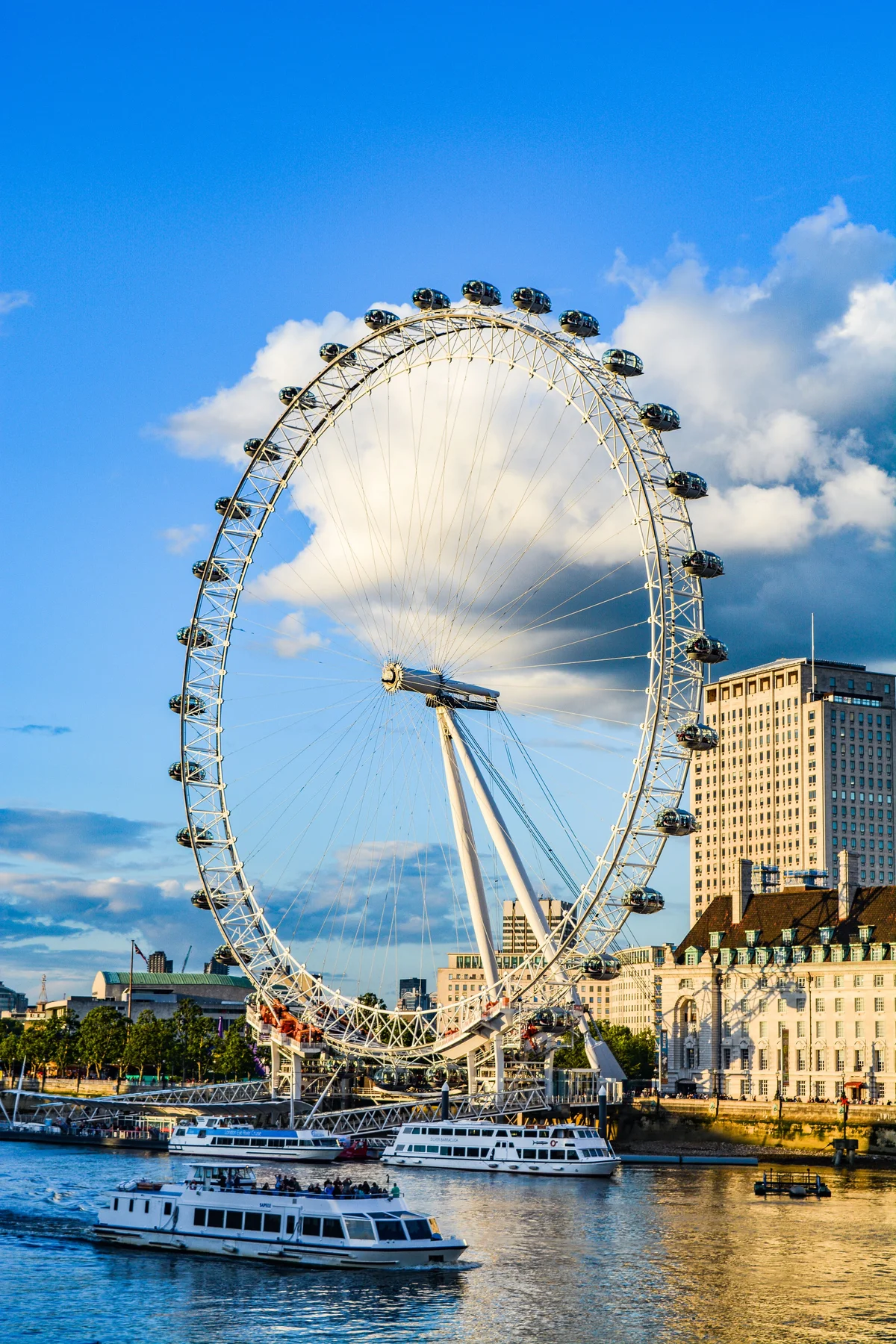
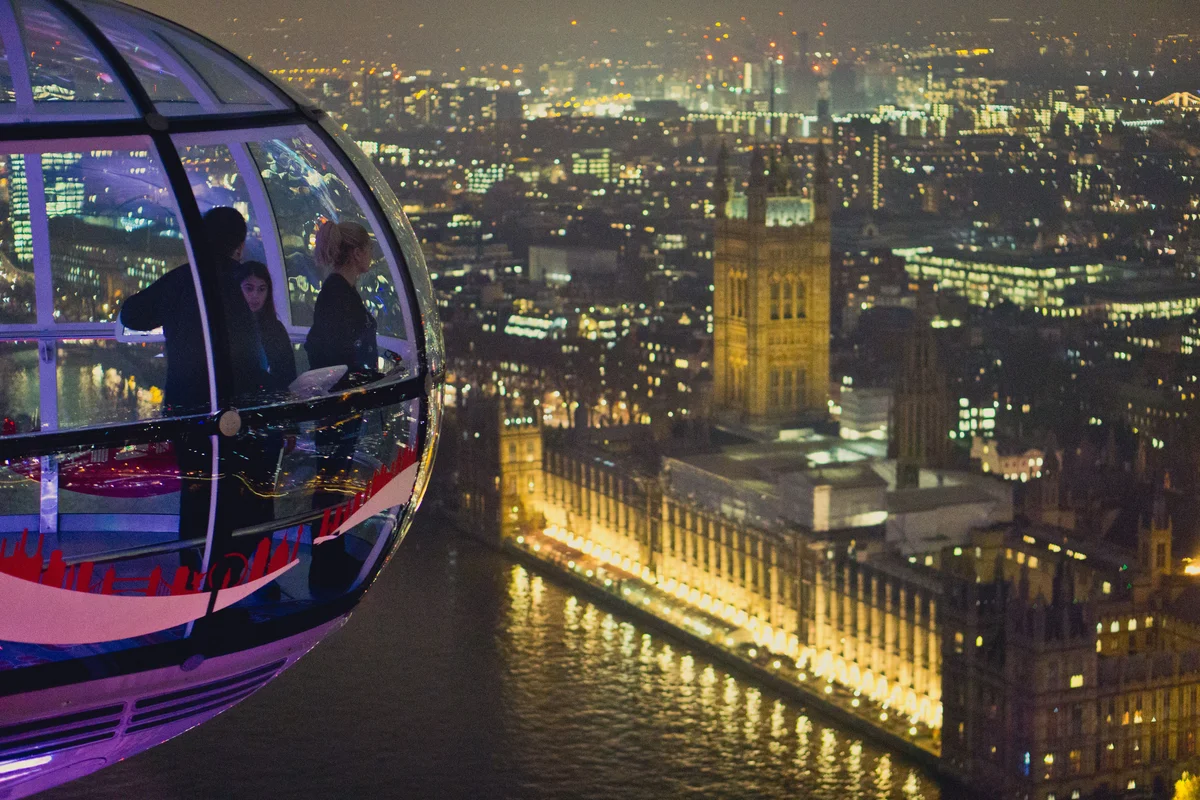
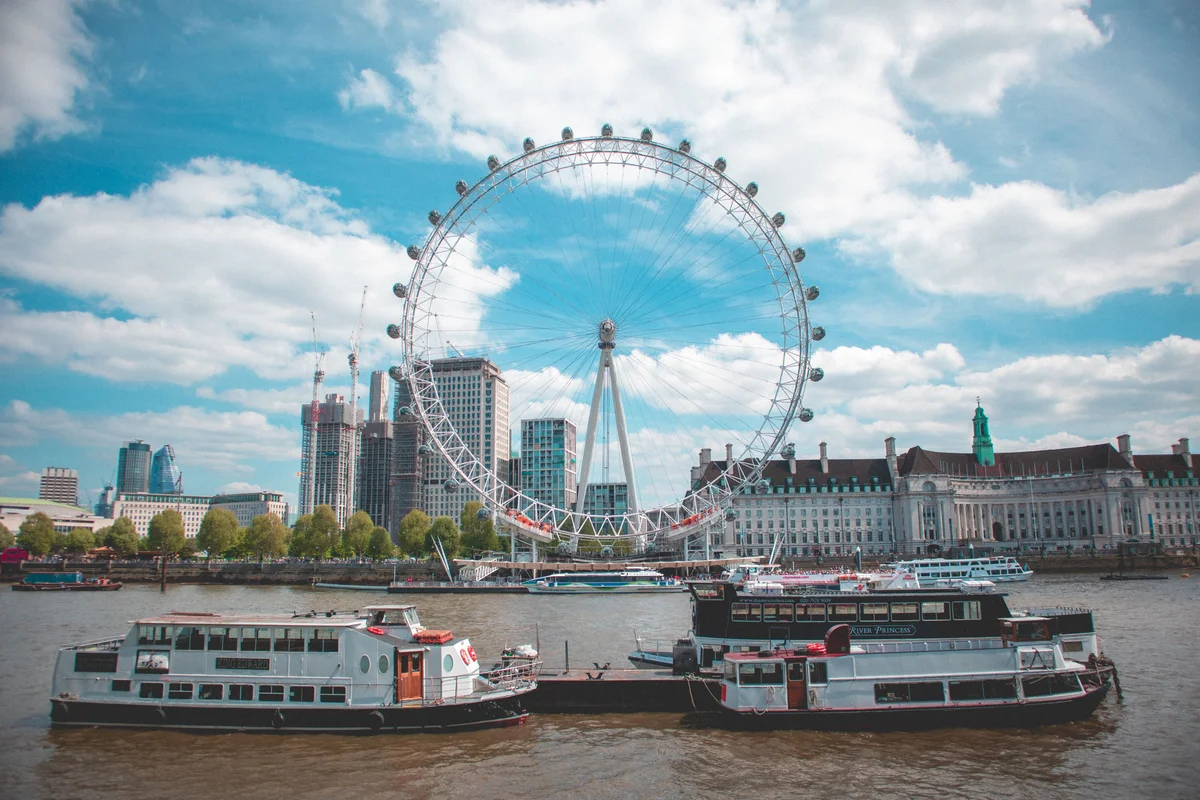
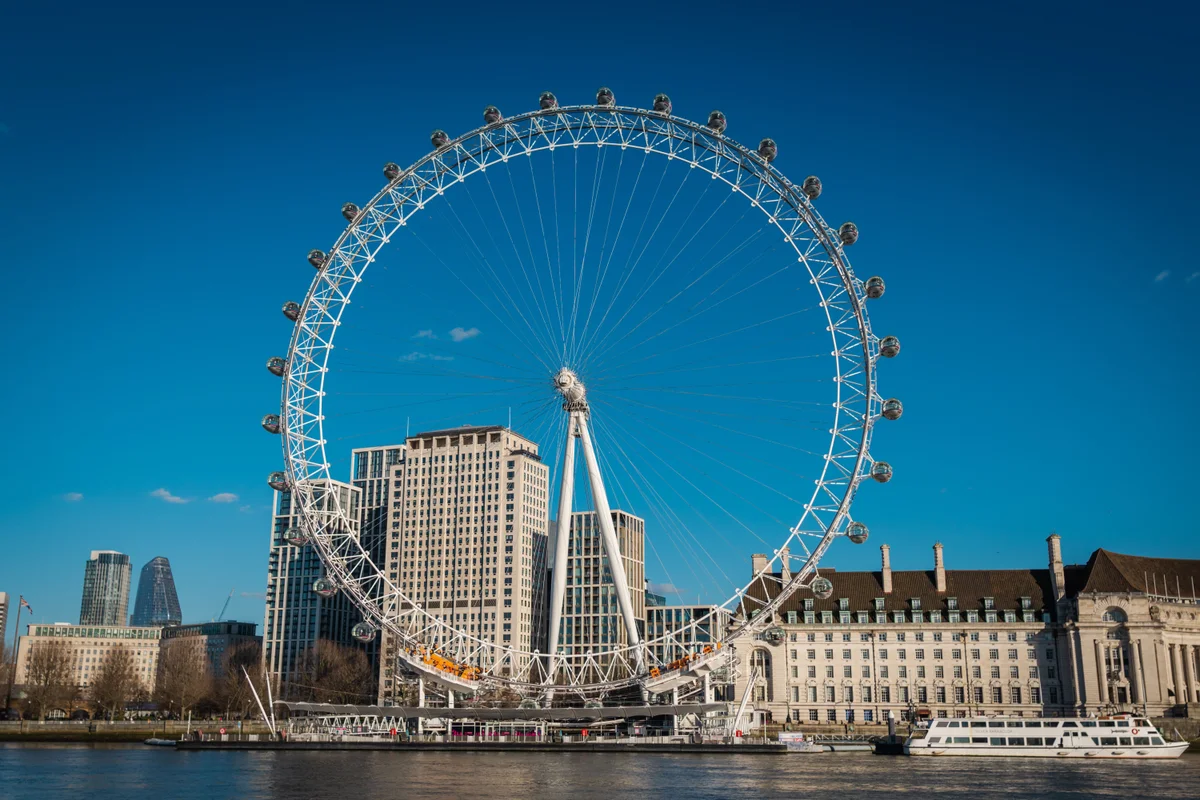
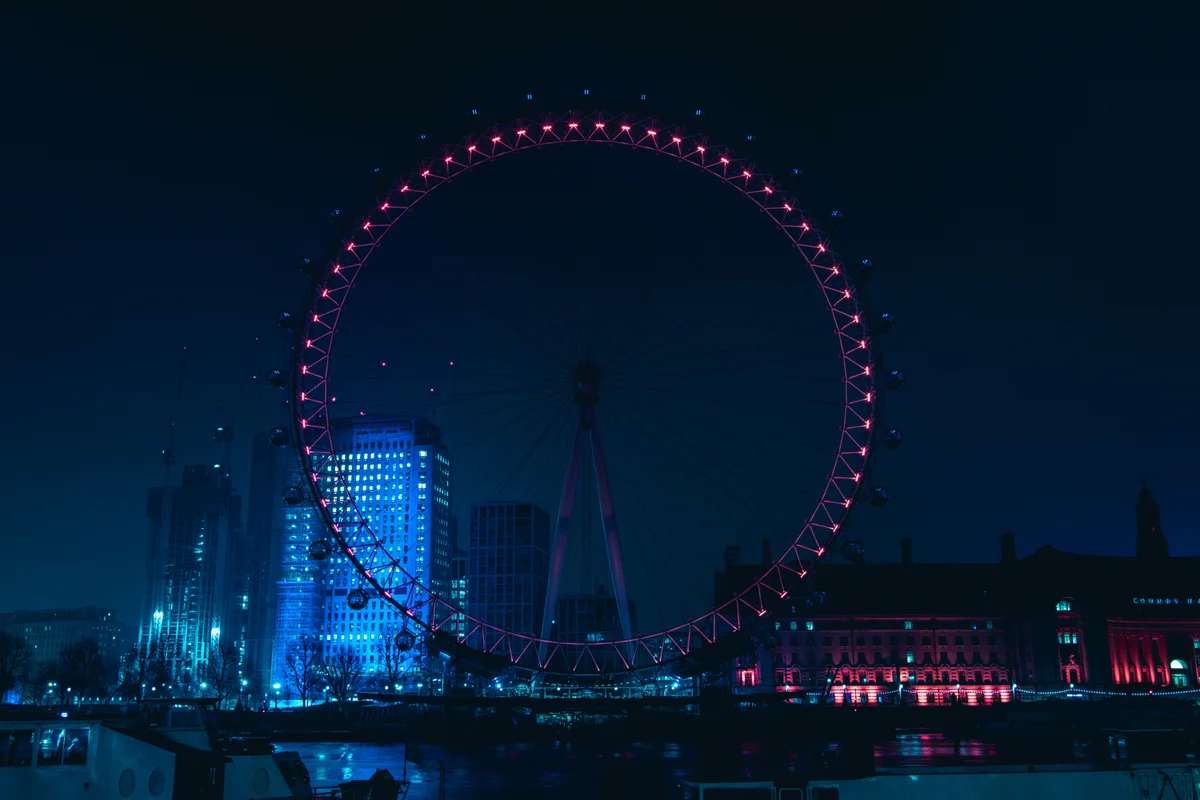
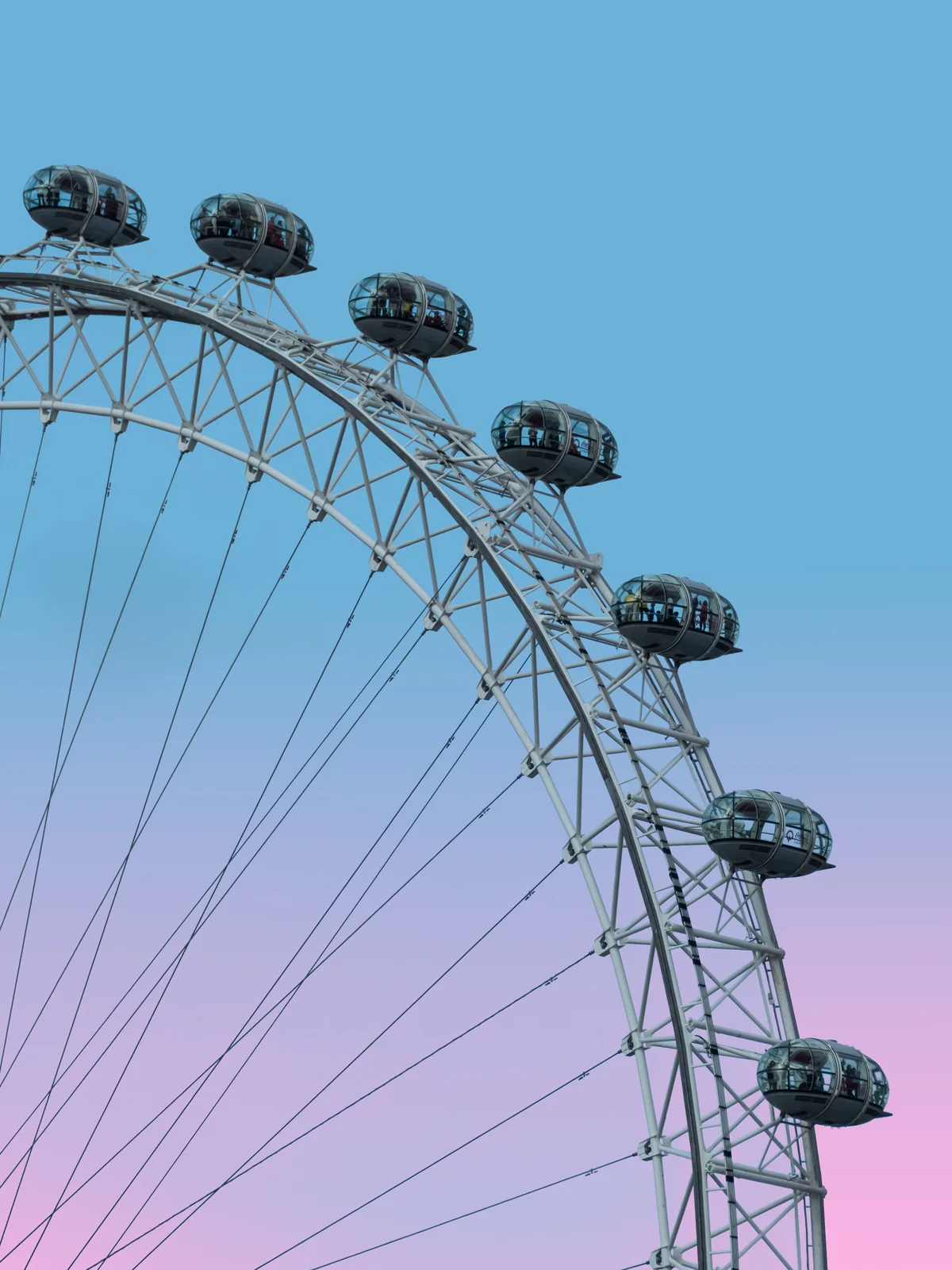
The London Eye, also known as the Millennium Wheel, is a cantilevered observation wheel situated on the South Bank of the River Thames in London. Standing at 135 meters tall, it was the world's tallest Ferris wheel upon its completion in 2000. The wheel comprises 32 high-tech glass capsules, each capable of holding up to 25 people, offering 360-degree panoramic views of the city. Visitors can see landmarks such as Big Ben, Buckingham Palace, and St. Paul's Cathedral. The London Eye is a popular tourist attraction, drawing millions of visitors annually.
What each source says
Bar length is review volume, so you can see how much weight sits behind each score. Captured 2026-08-26.
What visitors single out
Liked
- Comfortable Spacious Capsules Each glass pod is air-conditioned and surprisingly roomy, allowing guests to move around freely to take photographs. The generous space prevents a feeling of confinement, ensuring a pleasant experience even when the ride is fully occupied.
- Efficiently Managed Experience Despite high daily visitor numbers, the attraction is generally well-organized with clean, sanitized pods and professional staff. Pre-booked tickets and clear queueing systems help keep the boarding process moving smoothly for the majority of guests.
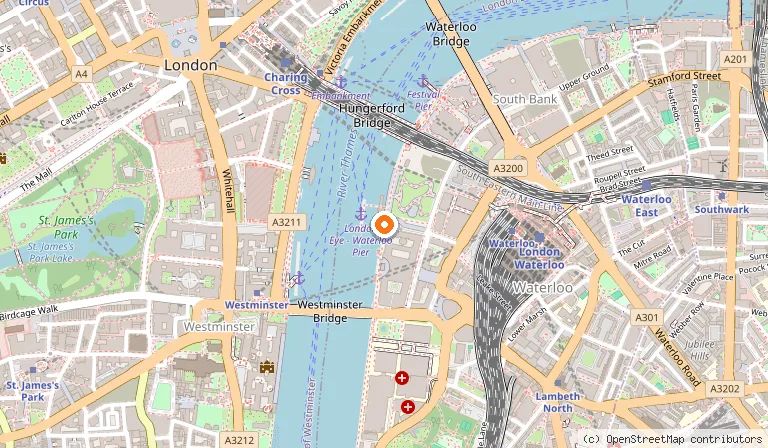
- Excellent Central Location Situated on the South Bank, the attraction is perfectly positioned near major transport hubs like Waterloo Station. This convenient location allows visitors to easily integrate the ride into a larger day of sightseeing alongside other nearby landmarks and attractions.
- Smooth and Relaxing Ride The observation wheel moves at a slow, steady pace, making the ride incredibly smooth and peaceful. It is suitable for all ages, and even those nervous about heights often find the stable, enclosed capsules comfortable and secure.
- Stunning Panoramic Views The London Eye offers spectacular 360-degree views of the city skyline. Landmarks like Big Ben, the Thames, and the Shard are clearly visible, providing an especially magical experience during sunset or at night when the city is beautifully illuminated.
Criticised
- Crowded and Commercialized Feel The attraction can feel like a tourist trap due to aggressive photo-upselling and heavy corporate branding. Some guests find the experience lacks a personal touch, feeling more like being herded in crowds than enjoying a premium landmark.
- Expensive Ticket Pricing Many visitors feel the standard ticket prices are quite steep for a thirty-minute ride. Compared to free alternatives like the Sky Garden or Tate Modern, some travelers argue the cost does not provide sufficient value for money.
- Lack of Informative Guidance Several reviewers noted the absence of helpful audio guides or descriptive placards within the capsules. Without interactive elements to identify the landmarks below, it can be difficult for visitors to fully appreciate the vista.
- Significant Waiting Times Even with pre-booked time slots, standard queueing can be very long during weekends and peak holidays. These extended wait times can lead to frustration and diminish the initial excitement of the visit for many families.
- Weather Dependency Issues The experience is heavily reliant on good weather for clear visibility. On cloudy or rainy days, sightlines are significantly obscured, making the high cost of admission feel less worthwhile when you cannot see the city clearly.
The longer read
The London Eye is a quintessential, albeit commercialized, tourist destination that consistently delivers on its promise of iconic, panoramic views. Guests uniformly report a smooth, 30-minute rotation that provides ample time to spot key landmarks like the Houses of Parliament, Big Ben, the Shard, and the winding River Thames. The glass capsules are spacious, air-conditioned, and move slowly enough to accommodate those who are nervous about heights or motion. While the "must-do" nature of the experience is debated by some who find it a "tourist trap," others emphasize that the bird's-eye perspective is unique and unmatched in its accessibility. For the best atmosphere, sunset or after-dark rides are widely recommended, as the cityscape transforms into a "carpet of lights," offering a more magical aesthetic than a midday visit.
Efficient planning is the difference between a frustrating experience and a memorable one. Long queues are the most frequent complaint; however, these are largely avoidable. Booking tickets online in advance is strictly required to secure a time slot and minimize wait times. Many seasoned visitors suggest purchasing "Fast Track" tickets during weekends or holidays, as standard lines can stretch for over an hour. While the price point is frequently criticized—with many reviewers noting the high cost of individual tickets compared to alternative viewpoints—value-conscious travelers can mitigate this by opting for combo tickets with other local attractions like the Sea Life Aquarium or Madame Tussauds, or utilizing passes like the Merlin Pass. Be prepared for aggressive up-selling regarding professional photographs, which many reviewers advise skipping as they are costly and unnecessary.
When evaluating the London Eye against other city viewpoints, consider your priorities. While the Eye offers a leisurely, moving perspective, competitors like the Sky Garden, The Shard, or the Tate Modern coffee shop are frequently cited as superior alternatives for budget-conscious travelers or those seeking a less "commercial" environment. The Sky Garden, in particular, offers free access and sweeping views, making it a strong contender for those who don't want to pay for a 30-minute Ferris wheel ride. Ultimately, the London Eye is best suited for families, first-time visitors, or special occasions—such as proposals or birthdays—where the convenience, location on the South Bank, and the unique, steady motion of the wheel provide a specific, structured experience that static viewing decks cannot replicate.
A synthesis of published third-party reviews. Not written by Breaks.
Getting there
- Phone
- +44 20 7967 8021
- Website
- londoneye.com
| Mon | 10:00 - 20:30 |
|---|---|
| Tue | 10:00 - 20:30 |
| Wed | 10:00 - 20:30 |
| Thu | 10:00 - 20:30 |
| Fri | 10:00 - 20:30 |
| Sat | 10:00 - 20:30 |
| Sun | 10:00 - 20:30 |
Against the neighbourhood
Rated 4.5 against a median of 4.5 across the 30 venues we hold for Lambeth, and the most-reviewed of them.
Still deciding?
- What is the London Eye and why is it considered a famous attraction in London?
- What is the best time of day or year to visit the London Eye for the best experience?
- What types of tickets and packages are available for visitors at the London Eye?
- What landmarks and features can be seen from the top of the London Eye?
- Is the London Eye suitable for families with children and are there any age restrictions?
What this page cannot tell you
- Descriptions and review summaries are supplied by the source index and are reproduced as published; they are not independently verified by Breaks.
- Ratings and review counts are point-in-time snapshots and drift constantly. Check the venue's own site or the rating provider for the current figure.
- Opening hours change seasonally and at short notice. Confirm with the venue before travelling.
- Category labels come from the source index and are occasionally wrong — a venue may be filed under a type that does not match how it trades.
- Straight-line distances understate real walking distance, especially where a river or railway sits between two points.